
Workplace Noise and Hearing Loss: How to Protect Your Hearing on the Job
September 15, 2026Hearing loss is a common health concern in the United States, and workplace noise exposure is an important contributing factor. Although hearing damage may not immediately come to mind when thinking about work-related injuries, prolonged exposure to loud environments can cause permanent, noise-induced hearing loss.
Research from the Centers for Disease Control and Prevention (CDC) has found that a significant number of workers experience hearing difficulties associated with workplace noise. Certain industries have particularly high rates of occupational hearing loss because employees may be exposed to loud machinery, equipment, tools, and other sources of excessive noise for extended periods.
Which Industries Have the Highest Risk?
Workers in several industries face an increased risk of developing hearing loss because of repeated exposure to loud workplace environments. Mining, construction, and manufacturing are among the industries where occupational noise exposure is a significant concern.
- Mining: Workers may be exposed to extremely loud machinery and equipment for prolonged periods.
- Construction: Heavy equipment, power tools, and other machinery can create hazardous noise levels.
- Manufacturing: Industrial machinery and production equipment can expose employees to continuous or intermittent loud noise.
While hearing loss is often associated with aging, noise-induced hearing loss can affect people of any age. Repeated exposure to excessive noise can gradually damage the sensitive structures within the inner ear, and the resulting hearing loss may be permanent.
How Common Is Hazardous Workplace Noise?
The Occupational Safety and Health Administration (OSHA) has identified workplace noise exposure as a significant occupational hazard. Millions of employees are exposed to potentially unsafe noise levels each year, making hearing protection an important part of workplace safety.
Employers have a responsibility to identify hazardous noise levels and implement appropriate measures to protect employees. However, workers should also take an active role in protecting their hearing whenever they are exposed to loud environments.
How to Protect Your Hearing at Work
If your job requires you to work around loud machinery, equipment, vehicles, or tools, taking precautions can help reduce your risk of permanent hearing damage.
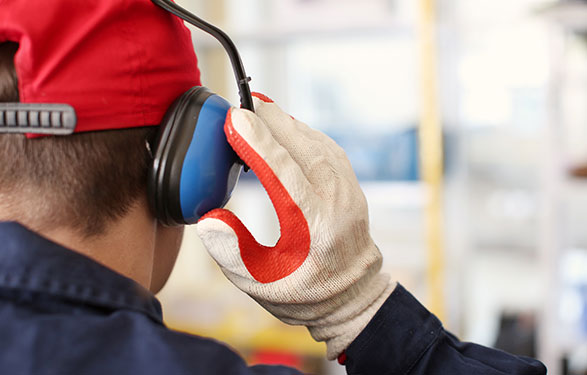
- Wear hearing protection: Use properly fitted earplugs or earmuffs whenever you are exposed to hazardous noise.
- Use protection consistently: Hearing protection is most effective when it is worn correctly and whenever you are in a noisy environment.
- Know your workplace noise levels: A smartphone sound-level application can provide a general indication of how loud your surroundings are, although professional noise monitoring may be necessary for an accurate workplace assessment.
- Talk to your employer: If you believe workplace noise may be putting your hearing at risk, discuss appropriate hearing protection and noise-control measures with your employer.
- Have your hearing tested: Regular hearing evaluations can help identify changes in hearing at an early stage, particularly for workers who routinely experience occupational noise exposure.
Don't Ignore the Risk of Hearing Loss
Noise-induced hearing loss can develop gradually, meaning you may not notice the damage until your hearing has already been affected. Ringing in the ears, difficulty understanding conversations, or needing to increase the volume of televisions and phones can be potential warning signs that your hearing should be evaluated.
Protecting your hearing should be part of your everyday workplace safety routine. If you work in mining, construction, manufacturing, or another noisy industry, consistently use appropriate hearing protection and speak with your employer about ways to reduce hazardous noise exposure.
Your hearing is valuable. Taking preventive steps today can help protect it for years to come.